Cadence
Daily scheduled collection, packaging, and publication. Manual runs are possible, but the public stream is designed to grow one dated observation at a time.
Next window
Calculating next 03:23 UTC run...
AI governance bridge
Cassandra uses trusted lists because they are public governance artifacts. The lesson is not about models; it is about claims, sources, hashes, receipts, caveats, and verifier outputs travelling together.
Next case studies
Later EATF cases can move into agent attestations, agent cards, evaluation receipts, incident records, lifecycle monitoring, and decision-transcript packages.
What Cassandra observes
Cassandra collects public list-derived artifacts, normalizes them into comparable local records, and reports structural changes such as hash changes, service inventory shifts, or provider-service detail changes.
What EATF proves
The Agent Trust Framework (EATF) binds the evidence package, payload, and declared hashes. It proves the observation package is intact, not that a provider is compliant or that a list has legal effect.
Why it matters
Governance systems often explain authority. Evidence systems explain what was seen, when it was seen, and exactly which bytes later readers can re-check.
Working lemma
Evidence is useful when it is bounded.
If E(t) = {S(t), D(t), R(t)} is a dated snapshot, diff, and receipt, Cassandra asks whether the receipt still binds the package bytes. It does not ask whether the public authority, court, auditor, or relying party should agree with the meaning of the change.
Public source
Fetched
Comparable view
Normalized
Change signal
Diffed
Evidence boundary
Packaged
Integrity check
Receipted
For public readers
Plain-language reading guide
- Trusted list
- A public trust infrastructure artifact. Cassandra treats it as a source to observe, not as a verdict to issue.
- Structural diff
- A machine-readable description of what changed between saved observations.
- EATF receipt
- An Agent Trust Framework receipt: a compact verification record for package integrity and declared hashes. See eatf.eu.
- Claim boundary
- The line between evidence integrity and legal, supervisory, or compliance interpretation.
For scholars
Method and scope
- Loading claim boundary...
Run history
Observation timeline
| Date | Fetched | Normalized | Records | Diffs | Event | EATF |
|---|
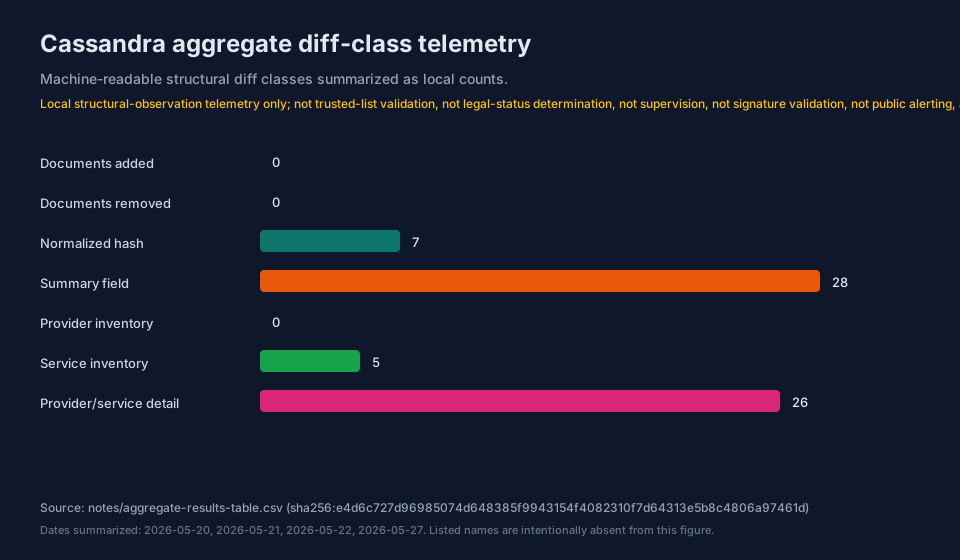
Diff classes
What changed most often
Figures
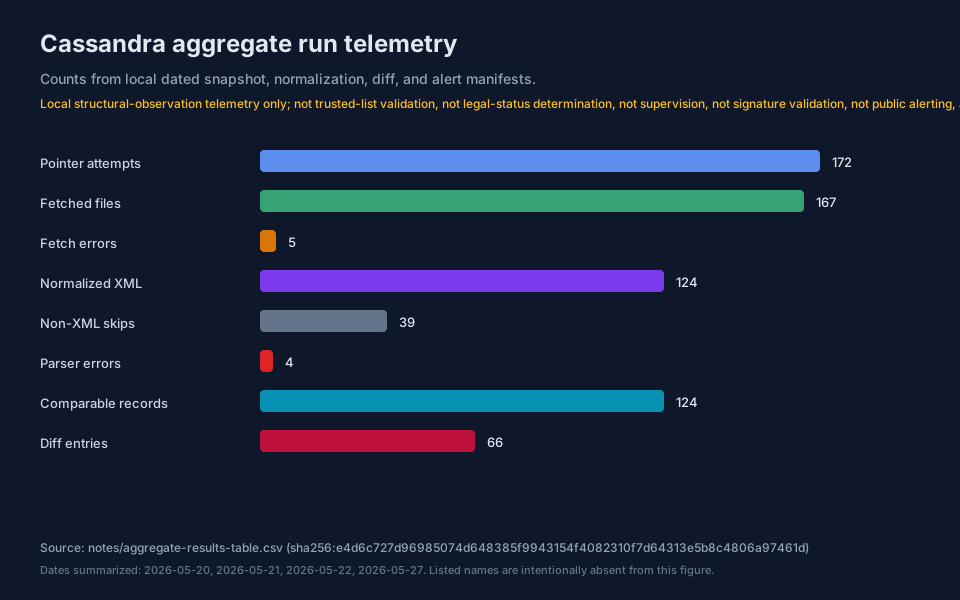
Aggregate telemetry
Large-print SVG figures generated from the public aggregate table.
Latest evidence package
Hashes and receipt boundary
Verify this observation
Download the package, then check it with EATF.
The verifier checks package integrity, signatures, timestamps, and declared hashes. It does not decide trusted-list legal status.
- Download the AEP package for the latest dated observation.
- Open the public EATF verifier and load the package.
- Compare the reported hashes with the values shown here and in the JSON index.